
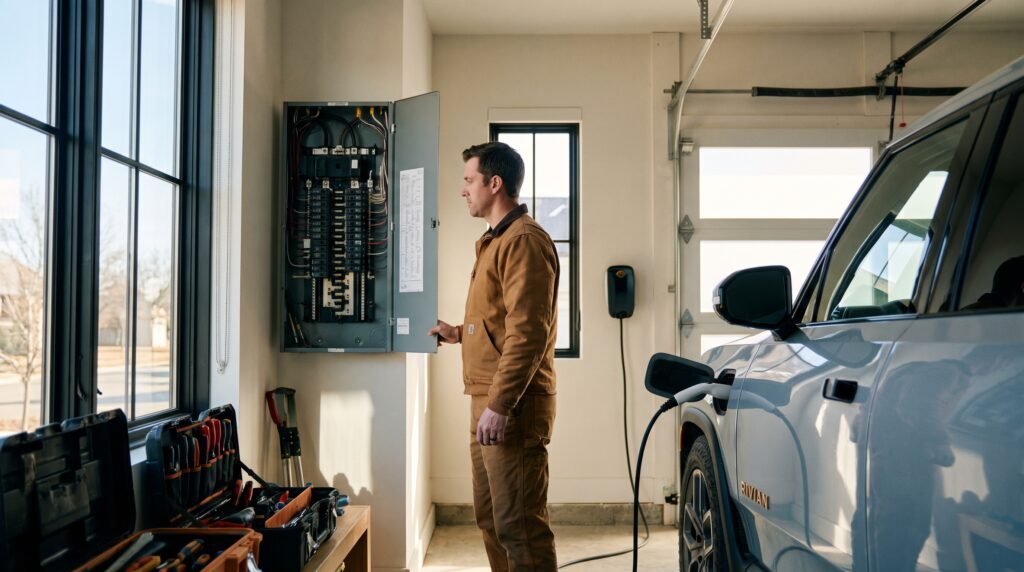
The rapid transition to residential electrification, driven by cold-climate heat pumps, Level 2 electric vehicle (EV) chargers, induction cooking, and home wellness amenities, places significant demands on home electrical infrastructure. In established communities throughout Ontario, including Newmarket and the Greater Toronto Area (GTA), homes operating on legacy 60-amp or 100-amp electrical services frequently face capacity bottlenecks. Before installing heavy-draw equipment, conducting proper electrical capacity planning is essential to prevent overloaded circuits, nuisance breaker trips, premature equipment failure, and code violations.
What is an Electrical Load Calculation?
An electrical load calculation is a mathematically adjusted assessment of a home’s expected peak power consumption, required by electrical safety codes before adding new major appliances. It ensures that your home’s electrical service and distribution panel have sufficient capacity to safely power all equipment without exceeding the main breaker’s rating.
A common error homeowners make is simply adding the raw nameplate wattages of all appliances together, which determines the connected load. However, electrical engineering and regulatory codes rely on the demand load. Because not all appliances run simultaneously at full power, codes apply statistical diversity and demand factors. While intermittent appliances like microwaves and electric ranges benefit from these reductions, continuous loads operating for three hours or more (such as Level 2 EV charging) are factored at full continuous demand under electrical safety code standards.
In Ontario, all load calculations must comply with the Ontario Electrical Safety Code (OESC) and the Canadian Electrical Code (CEC) Part I, Rule 8-200. Furthermore, ESA Bulletin 8-3-15 on Maximum Circuit Loading and Demand Factors mandates that the minimum service rating must equal or exceed the total calculated watts divided by 240 volts.
Assessing Current Electrical Service Capacities
Evaluating your existing service size is the first step in electrification planning. Standard residential services operate at 120/240V single phase and fall into several benchmark categories:
-
60-Amp Service (14.4 kW maximum): Found primarily in mid-20th-century housing stock, this service level is incapable of supporting modern multi-appliance electrical loads and generally requires an immediate upgrade.
-
100-Amp Service (24.0 kW maximum): The standard for homes built between the 1960s and 1980s. While adequate for baseline appliances paired with gas heating, a 100A panel becomes severely constrained when adding heat pumps, Level 2 EV chargers, or hot tubs.
-
200-Amp Service (48.0 kW maximum): The modern standard for whole-home electrification. It comfortably accommodates central heat pumps with auxiliary heat strips, high-amperage EV supply equipment, induction ranges, and finished basements.
-
400-Amp / 320-Amp Continuous Service (96.0 kW / 76.8 kW): Suitable for larger custom homes and properties requiring multi-vehicle high-output charging, multi-zone geothermal heating, or multiple high-demand amenities.
How Major Equipment Impacts Electrical Load
When homeowners add heavy appliances, the impact on the electrical panel varies based on the equipment’s continuous draw and duty cycle. EV chargers are often among the most demanding additions because continuous loads receive no demand factor reduction under electrical codes.
Here is how common major additions impact an existing 100-Amp electrical service:
-
Cold-Climate Heat Pump (Central): Operating at 24A to 40A, a central heat pump absorbs 25% to 40% of a 100A main service capacity.
-
Heat Pump Auxiliary Electric Strips: Pulling 20A to 60A during deep freezes, these strips frequently push 100A panels past their safe operating limits.
-
Standard Level 2 EV Charger: Requiring 32A to 40A of continuous power, standard EV charging represents a significant sustained load. Upgrading to a high-power Level 2 charger (48A to 64A) typically requires a service upgrade or smart load-management technology on a 100A service.
-
Hot Tub / Swim Spa: Pulling 32A to 48A continuously while heating, spas create severe panel congestion and limit future appliance additions.
-
Induction Range: Drawing up to 40A, induction ranges have a moderate impact because they benefit from code diversity factors (calculated at a 6,000 W base under CEC).
Smart Energy Management (EVEMS) vs. Service Upgrades
When a calculated demand load exceeds the available capacity on a 100A or 200A service, homeowners must choose between a physical utility upgrade or deploying Smart Load Management.
Under CEC Rules 8-106(10) and 8-106(11), Electric Vehicle Energy Management Systems (EVEMS) allow homeowners to add heavy loads without upgrading their utility service. Using Current Transformers (CTs), the EVEMS monitors real-time household consumption. If the total draw exceeds 80% of the service rating, the system automatically throttles or sheds the EV charger. According to Eaton’s EVEMS Implementation Guide, loads controlled by an approved EVEMS are legally excluded from the main service calculation.
Electrical Panel Upgrade vs. Service Upgrade: What’s the Difference?
Understanding the technical distinction between panel and service upgrades is critical for accurate project planning.
An electrical panel upgrade replaces the indoor distribution board to add physical circuit breaker space and remove obsolete or hazardous hardware (like older fuse boxes), but it does not increase the total electrical power supplied from the utility grid.
An electrical service upgrade is a comprehensive replacement of both internal and external infrastructure to increase total incoming grid power. This includes upgrading the overhead service mast, external meter base, and service entrance conductors, alongside installing a new main breaker panel. Service upgrades require extensive coordination with Local Distribution Companies (LDCs), such as Alectra Utilities or Hydro One, for disconnects and reconnects, complying with strict utility standards like Alectra Utilities Service Procedures and Hydro One Conditions of Service.
Before investing in major electrification equipment like cold-climate heat pumps, hot tubs, or Level 2 EV chargers, homeowners in Newmarket and the GTA should obtain a comprehensive electrical capacity assessment from an ECRA/ESA-licensed electrical contractor to determine whether a service upgrade, panel replacement, or smart energy management system is the most efficient path forward.
Frequently Asked Questions (FAQ)
What services does a residential electrician in Newmarket provide?
A residential electrician in Newmarket must be an ECRA/ESA Licensed Electrical Contractor authorized to pull permits and perform complex home installations across York Region safely. Their core services include performing code-compliant load calculations, installing dedicated circuits for heavy equipment like heat pumps and EVs, integrating whole-home surge protection, and establishing subpanel distribution. Choosing an experienced licensed provider ensures that all additions meet current OESC standards and pass mandatory ESA inspections.
When should I hire an electrician for wiring upgrades in Newmarket?
You should hire an electrician for wiring upgrades in Newmarket when transitioning legacy mid-century housing away from ungrounded circuits or aluminum branch wiring, or when you need to add high-amperage 240V dedicated lines. In established neighborhoods, modernization is critical before installing ductless heat pumps, Level 2 EV chargers, or large luxury hot tubs, ensuring the physical copper runs can handle sustained electrical demand without overheating.
How do I choose an electrical panel upgrade contractor in Newmarket?
An electrical panel upgrade contractor in Newmarket evaluates whether your home simply needs a larger indoor breaker board to resolve circuit congestion, or if you require a complete 200A service upgrade to draw more total power from the utility grid. You should look for an ECRA/ESA-certified contractor who prepares permit-ready CEC Rule 8-200 load calculations, actively coordinates the grid disconnect/reconnect sequence with your local utility provider, and secures the final ESA Certificate of Acceptance. For example, licensed contractors like Silco Energy provide turnkey utility coordination and panel conversions across the GTA.
Conclusion
The modernization of residential energy through EVs and heat pumps brings immense benefits, but it also fundamentally alters how a home consumes power. Proper electrical capacity planning is non-negotiable. Whether you opt for a smart EVEMS device to strategically manage loads or invest in a comprehensive 200-Amp service upgrade, working with licensed professionals ensures your home’s infrastructure remains safe, resilient, and code-compliant.